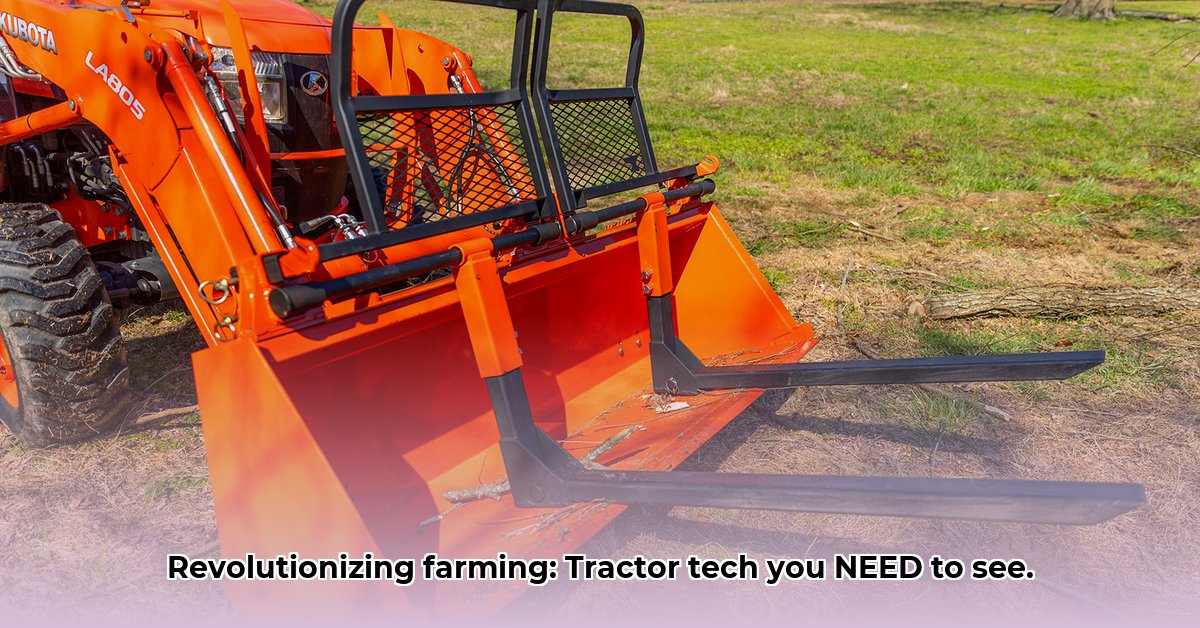
Farming is undergoing a technological revolution. Gone are the days of solely relying on intuition and manual labor; today, smart tractors are transforming how we cultivate our land, boosting yields while promoting sustainable practices. This article explores the latest tractor technology impacting modern agriculture, detailing how these advancements contribute to heightened efficiency and reduced environmental impact. We'll provide actionable steps to help you assess and implement these technologies on your farm. For more on tractor attachments, check out this resource.
The Precision Revolution: Smart Tractor Tech and Sustainable Farming
Modern agriculture demands efficiency: maximizing yields while minimizing waste. Precision farming, driven by advanced tractor technologies, is the key. Imagine GPS-guided steering systems, similar to those in self-driving cars, ensuring your tractor navigates fields with pinpoint accuracy, minimizing overlaps and maximizing resource utilization. This translates to significant savings in time, fuel, and valuable resources; reducing the need to till the land multiple times. This is more than just convenience for the farmer, it's sustainable farming in action.
But precision farming isn't just about autonomous navigation. Advanced operator interfaces featuring intuitive touchscreens and user-friendly controls provide real-time feedback on crucial parameters. Your tractor becomes a high-tech data center on wheels, empowering informed, data-driven decision-making directly from the cab. How much time could you save with this sort of precision? Are you maximizing the potential of your current machinery?
Fuel Efficiency: A Smart Investment for the Future
Fuel costs significantly impact farm profitability. Modern tractor designs prioritize fuel efficiency, offering noticeable improvements over older models. Newer technologies reduce fuel consumption, leading to lower running costs and a reduced carbon footprint. This demonstrates a direct correlation between technology adoption and environmental responsibility. Is your current equipment contributing to a greener future?
The Power of the PTO: Often Overlooked, Always Essential
The power take-off (PTO) – the unsung hero of tractor technology – deserves attention. This crucial component powers a wide array of attachments, from planters and harvesters to specialized tools. A robust PTO system is essential, offering unparalleled versatility and transforming your tractor into a powerhouse for various tasks. How is the PTO system on your tractor currently affecting your operational efficiency?
Choosing the Right Tractor: A Personalized Approach
The agricultural equipment market is vast. Selecting the optimal tractor necessitates a careful evaluation of your specific needs. Large-scale operations may require powerful, feature-rich machines, while smaller farms might find leasing or purchasing a used tractor more suitable. The key is understanding your farm's unique requirements. Should you opt for a new, top-of-the-line model, or would a used, well-maintained tractor better serve your operation?
Here's a comparative analysis of key tractor features:
| Feature | Pros | Cons |
|---|---|---|
| Advanced Technology | Enhanced efficiency, reduced waste, improved accuracy, better decision-making | Higher upfront cost, potential technological issues, requires skilled operators |
| Fuel Efficiency | Lower running costs, environmentally responsible operation | May necessitate compromising on power or specific features |
| Robust PTO System | Versatility, crucial for various farming operations | Demands regular maintenance, parts subject to wear and tear |
The Future of Farming: Sustainable Practices with Smart Tractors
Sustainable farming practices are paramount for the future of agriculture. Modern tractors and precision farming are integral components of this vision. Investing in smart tractor technology means investing in efficiency, profitability, and environmental responsibility. This requires meticulous planning and a long-term perspective. Are you prepared to embrace these changes in your farming practices?
How to Compare Long-Term Economic Viability of Precision Agriculture vs. Traditional Farming
Key Takeaways:
- Precision agriculture offers substantial long-term increases in yields and resource optimization, but necessitates a significant upfront investment.
- Traditional farming methods are generally more affordable initially but often lack the efficiency and sustainability of precision farming.
- Comparing long-term economic viability requires a comprehensive analysis encompassing initial investment costs, operational expenses, yield improvements, resource savings (water, fertilizer, pesticides), labor costs, and market price fluctuations.
- A thorough cost-benefit analysis, considering various farm scales and crop types, is crucial for informed decision-making.
- Access to technology, infrastructure (internet and data storage), and technical expertise are key determinants of precision farming's feasibility.
Tradition vs. Technology: A Shifting Landscape
Farming has always involved balancing resources, optimizing yields, and adapting to changing conditions. However, the tools and techniques have dramatically evolved. For centuries, reliance on manual labor, intuition, and generalized practices were the norm; this worked, but not always effectively or sustainably. Precision farming, driven by technology and data-driven decision-making, represents a paradigm shift. This transition is as profound as the move from horse-drawn plows to tractors. How do you navigate this choice? A careful evaluation of long-term economic viability is essential.
The Economics of Traditional Farming: A Familiar Approach
Traditional farming often involves lower initial investment costs. Farmers utilize established practices and readily accessible tools, resulting in generally lower overhead. This makes it a more accessible option, especially for smaller farms or areas with limited technological access. However, this can lead to inefficiencies—over-application of inputs, inconsistent yields, and unsustainable practices. These inefficiencies can negatively impact profitability and environmental sustainability in the long run.
Precision Farming: A High-Tech Harvest
Precision agriculture employs technology to refine every farming aspect, aiming for maximum efficiency and minimal waste. GPS guidance, sensors, drones, and data analysis tools help farmers optimize seeding, fertilizer application, irrigation, and pest control. This targeted approach results in higher yields, reduced input costs, and minimized environmental impact. However, the initial investment in equipment and software can be substantial. Farmers also need training and potentially specialized support personnel.
A Framework for Decision-Making: Comparing Long-Term Viability
Comparing long-term economic viability demands a thorough approach, going beyond immediate costs. Consider these factors:
- Initial Investment Costs: Compare the upfront expenses of equipment and technology in precision farming against the simpler needs of traditional methods.
- Ongoing Operational Expenses: Account for fuel, maintenance, repairs, software licenses, and potential technical support.
- Yield Increases: Estimate potential yield improvements with precision farming compared to traditional methods. Consider specific crops and environmental factors.
- Resource Savings: Quantify reductions in water, fertilizer, and pesticide usage.
- Labor Costs: Analyze labor requirements. Precision farming may reduce some labor needs while increasing others (data analysis).
- Market Price Fluctuations: Account for market price variations and their impact on profitability. Precision farming's risk management capabilities may offer an advantage.
Analyzing this data over a 3-5 year period will offer a clearer picture of long-term profitability.
Data Visualization: A Visual Representation (Illustrative Example)
| Year | Traditional Farming (Net Profit) | Precision Farming (Net Profit) |
|---|---|---|
| Year 1 | $20,000 | $10,000 (high initial investment) |
| Year 2 | $22,000 | $25,000 |
| Year 3 | $25,000 | $35,000 |
| Year 4 | $23,000 | $40,000 |
| Year 5 | $26,000 | $45,000 |
(Note: This is a hypothetical example. Actual results will vary significantly based on numerous factors.)
Navigating the Transition: Challenges and Opportunities
Adopting precision agriculture presents challenges: farmers require training, reliable internet access, and robust technical support. Data security and technological dependence are critical concerns. However, the potential benefits—increased efficiency, resource conservation, and enhanced profitability—are compelling. A well-planned and strategic approach, considering individual farm needs and resources, is key.